HomeBlog
Guides Bird Photography in Japan: A Month-by-Month Guide
Bird Photography in Japan: A Month-by-Month Guide
Japan is a highly seasonal bird photography destination. Winter is the peak season, with Red-crowned Cranes, sea eagles, swans and large crane gatherings, while spring and autumn are best for migration and summer for breeding birds and seabirds.
Nick Ludovic Green
6 mins read
Share
Japan is one of the most rewarding countries on earth for a bird photographer — and one of the most seasonal. The same archipelago that delivers the planet's most famous winter wildlife spectacle, dancing cranes and sea eagles on the pack ice, becomes a quiet land of forest songbirds and breeding seabirds just a few months later. Knowing when to go is everything.
With more than 600 species recorded and a high proportion of them migratory, the country's birding rhythm is driven by the seasons. This is a month-by-month guide to what's happening and where to point your lens through the Japanese year.
Why Winter Steals the Show
Most photographers come to Japan for winter, and with good reason. The cold months concentrate the country's most dramatic birds at predictable sites: Red-crowned Cranes gather and dance in the snowfields of eastern Hokkaido, Steller's and White-tailed Sea Eagles mass along the Shiretoko coast as sea ice pushes in, and in the far south of Kyushu, tens of thousands of Hooded and White-naped Cranes blanket the fields at Izumi. Less foliage, snow that drives animals down from the mountains, and an influx of migrants that winter nowhere else all combine to make winter the prime season.
But Japan is increasingly a year-round destination, so the full calendar is worth understanding.
December to February: The Winter Spectacle
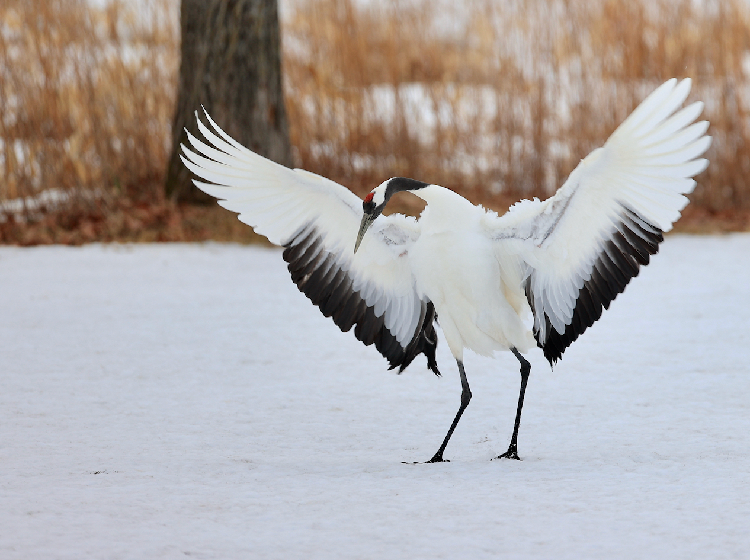
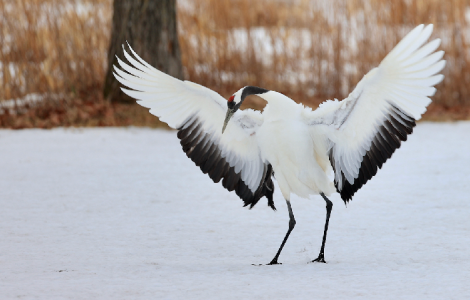
This is the heart of it. In eastern Hokkaido, the resident Red-crowned Cranes gather at feeding sites around Tsurui and Kushiro, and from around February begin their elaborate courtship dances — the iconic image of Japanese wildlife. Dawn at the Otowa Bridge, with cranes roosting in the steaming river below, is one of the most celebrated photographic settings in the country.
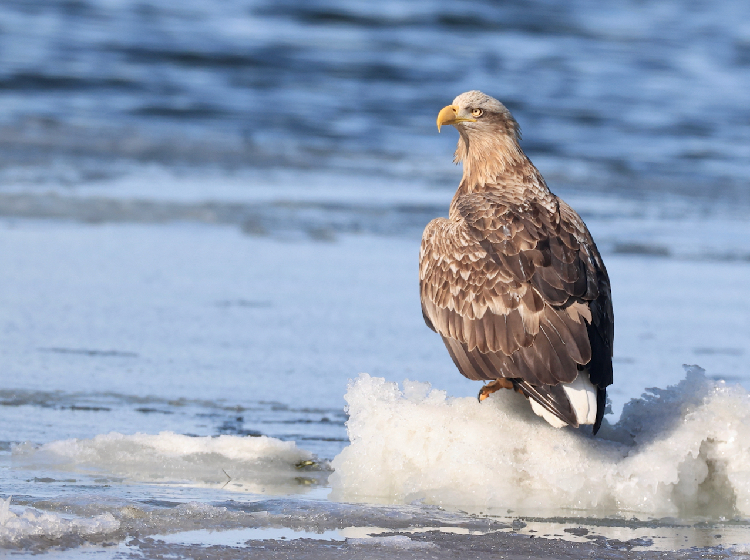
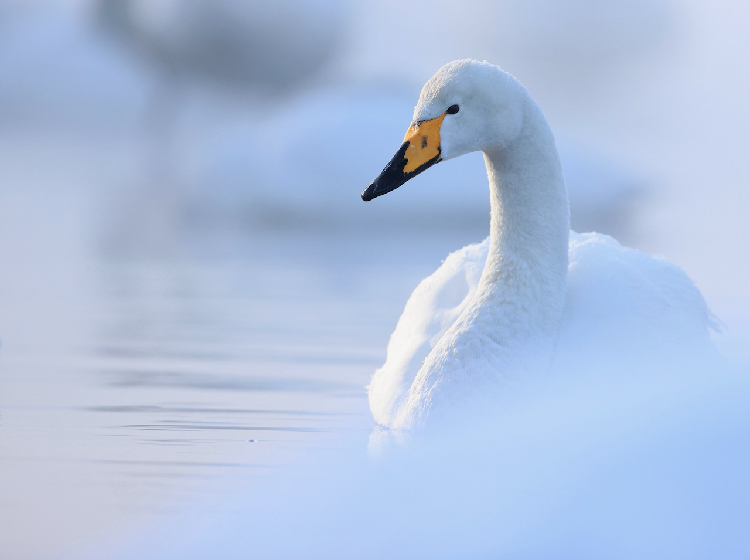
February is also peak time for the eagles. As sea ice reaches the Shiretoko Peninsula, boat trips out of the small port of Rausu put you among gathering Steller's and White-tailed Sea Eagles fishing and fighting over the floes — frame-filling drama against snow-covered peaks. At Lake Kussharo, geothermal warmth keeps the water open and draws in Whooper Swans that announce themselves with stirring calls amid the mist.
Whooper Swan, 大天鹅, Cygnus cygnus (Species)
Meanwhile, far to the south in Kyushu, the Izumi (Arasaki) wetlands hold the winter's other great gathering: close to 15,000 Hooded Cranes plus White-naped Cranes, with rarities like Sandhill, Common and the occasional Siberian Crane hidden in the throng. Hokkaido's night birds add another dimension, with the colossal Blakiston's Fish Owl and the rounded Ural Owl both findable for those who seek them. It's also the season for the adorable, snowball-like "Shima Enaga" (the Hokkaido long-tailed tit), a favourite winter target.
March: The Season Turns
Winter begins to release its grip. The southern cranes leave Kyushu on their northward migration in late February and early March, while in Hokkaido the Red-crowned Cranes start moving back out to their breeding territories. The sea ice retreats, and with it most of the Steller's Sea Eagles head north toward Russia — though lingering young birds can often still be found in eastern Hokkaido into the month. It's a transitional period: still wintry in the north, with the last of the great gatherings before they disperse.
April and May: Spring Migration and Blossom
Spring sweeps north with the cherry-blossom front, and the photography shifts to migration and breeding. Shorebirds concentrate at coastal bays and river mouths, waterfowl flood northward toward Russia, and the woodlands fill with the songs of returning breeders. This is the time for Japan's beautiful forest songbirds — thrushes, the brilliant Narcissus Flycatcher and others — often photographable against fresh spring green or blossom. In Hokkaido, snow lingers in the mountains well into spring while the lowlands green up.
June to August: Summer Breeders and Seabirds
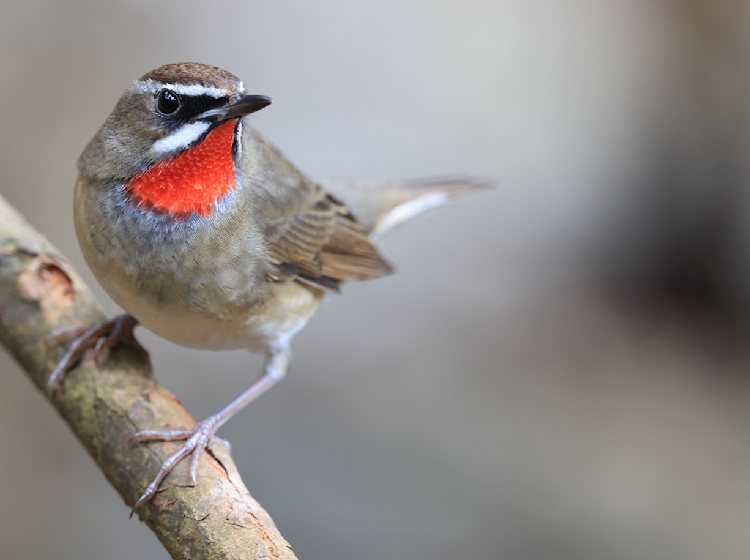
Summer is the quiet season for headline spectacle but lovely for breeding birds. Hokkaido's marshes and forests come alive with summer visitors: the dramatic display flight of Latham's Snipe drumming over the wetlands, singing Siberian Rubythroats, and White-tailed Eagles hunting around the coasts and lakes. Offshore islands such as Teuri host breeding seabird colonies — Spectacled Guillemots, Rhinoceros Auklets and more. Be aware that late summer overlaps with the typhoon season in the south, and central Honshu can be very hot. This is a season for the dedicated, rewarded with birds in full breeding plumage and far fewer crowds.
September to November: Autumn Passage
Autumn brings migration in reverse. Early-returning shorebirds appear at coastal wetlands from late summer, and through the autumn the East Asian Flyway funnels migrants down the archipelago. By October and November the southern cranes return to Izumi, the first Steller's Sea Eagles begin arriving in Hokkaido as temperatures drop, and the migrant swans return in trumpeting flocks. November is when winter truly begins to assemble — a fine, less-crowded window to catch the front edge of the spectacle.
Planning Your Trip Around the Calendar
If your priority is the classic Japanese wildlife portfolio — dancing Red-crowned Cranes, Steller's Sea Eagles on the ice, Whooper Swans in the mist — then late January and February are the bullseye, ideally combining eastern Hokkaido with a southern leg to Kyushu's crane gathering. If you'd rather photograph forest songbirds, breeding seabirds and migration with fewer people around, the spring and autumn shoulders reward you handsomely.
A typical winter photography trip works best at around ten days, allowing time for the cranes at Tsurui, the eagle cruise at Rausu, the swans at Kussharo and the night owls, without rushing the weather — which, in a Hokkaido winter, you cannot control and must give yourself room to work around.
Ready to Photograph Japan in Winter?
Japan's winter spectacle genuinely lives up to its reputation, but the best results come from being at the right site at the right hour with guides who know exactly where the cranes roost, when the eagles gather, and how to read the ice and the light. Our Japan bird photography tours are timed for the peak of the winter season and built around these iconic subjects.
If you'd like to combine Japan with another northern winter destination, or focus a custom trip around a particular target like the Blakiston's Fish Owl, our custom photography tours can be shaped around it. Get in touch and let's plan your Japanese winter.
Nick Ludovic Green
Nick Ludovic Green is a bird photographer and founder of Bird-Photo-Tours ASIA, leading small-group expeditions across Asia and Oceania.
Japan is a highly seasonal bird photography destination. Winter is the peak season, with Red-crowned Cranes, sea eagles, swans and large crane gatherings, while spring and autumn are best for migration and summer for breeding birds and seabirds.
A practical guide to hide photography in China, covering how bird hides work, what species to expect, how to prepare your gear and mindset, and why hides are essential for photographing pheasants, tragopans and forest birds.
A practical guide to photographing birds-of-paradise in Papua New Guinea, covering key regions, signature species, the best season, photography conditions, gear tips and itinerary planning.