HomeBlog
Guides Why Central Asia Is Birding’s Best-Kept Secret: Kazakhstan, Tajikistan & Uzbekistan
Why Central Asia Is Birding’s Best-Kept Secret: Kazakhstan, Tajikistan & Uzbekistan
A guide to bird photography in Central Asia, covering Kazakhstan, Tajikistan and Uzbekistan, with highlights such as Turkestan Ground-Jay, White-browed Tit-Warbler, steppe birds, desert species and mountain specialties.
Nick Ludovic Green
6 mins read
Share
Ask most wildlife photographers where they dream of pointing their lens, and they’ll name the usual giants: the Himalayas, the rainforests of Borneo, the cranes of Japan. Almost nobody says Kazakhstan. And that, for those who know, is exactly the point.
Central Asia is one of the last genuinely under-photographed birding regions on earth. It sits at a crossroads of habitats — Tien Shan mountains, vast steppe grasslands, saxaul desert, high-altitude lakes — and holds a roster of range-restricted specialties you simply cannot photograph anywhere else, often against landscapes of breathtaking emptiness. You can spend a morning here working a desert lek with snow-capped peaks on the horizon and not see another vehicle all day.
If you’re a photographer looking for spectacular birds without the crowds, here’s why Kazakhstan, Tajikistan and Uzbekistan deserve a place near the top of your list.
The Specialties You Can’t Get Anywhere Else
The real draw of Central Asia is its endemic and near-endemic birds — species whose entire world range falls within this region or barely spills beyond it. For a photographer building a portfolio, these are the frames that genuinely can’t be replicated on a trip to anywhere else.
Top of almost everyone’s wish list is the Turkestan Ground-Jay (also known as Pander’s Ground-Jay), a long-legged, sandy-coloured desert bird that runs between saxaul bushes and is best found in the cool of early morning along desert tracks in the Kyzylkum. It is one of the most sought-after birds in the entire region and a true signature image of Central Asia.
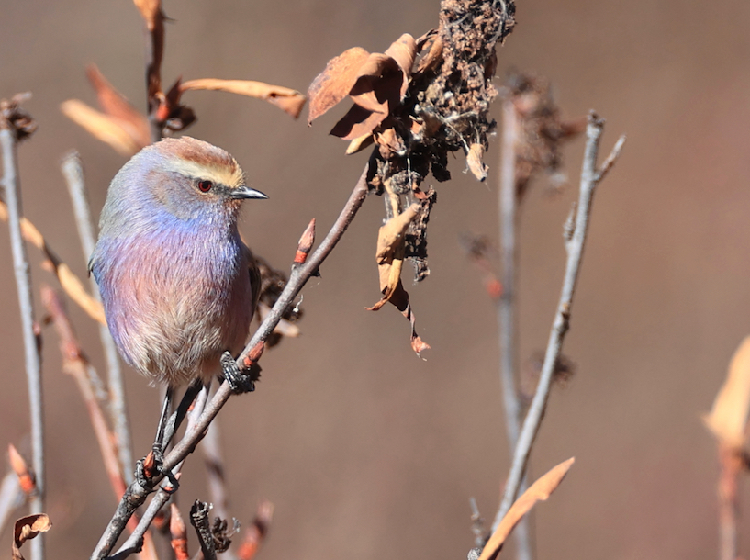
The mountains add another layer entirely. The White-browed Tit-Warbler — a tiny, almost impossibly pink-and-lilac jewel of the Tien Shan — is one of the most beautiful small birds in Asia and a target that draws photographers from around the world. Alongside it, the high country holds Ibisbill along the rocky rivers, Himalayan Snowcock on the screes, Himalayan Rubythroat, Eversmann’s Redstart, and the lovely yellow-breasted form of the Azure Tit.
Ibisbill, 鹮嘴鹬, Ibidorhyncha struthersii (Species)
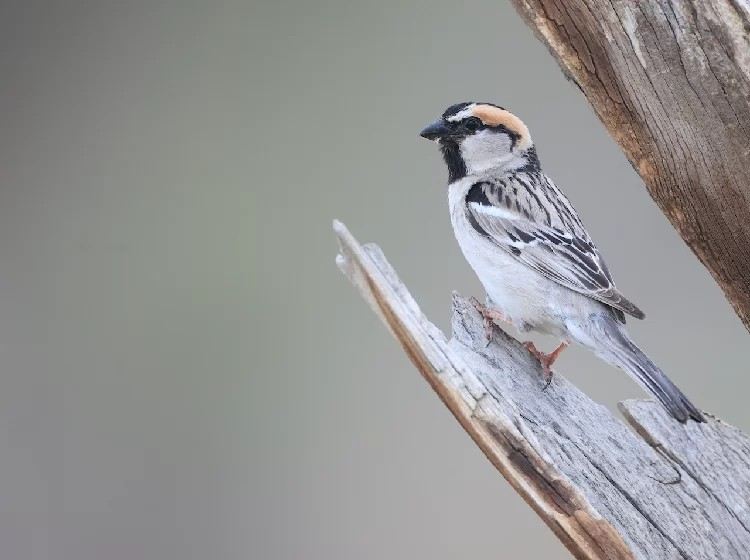
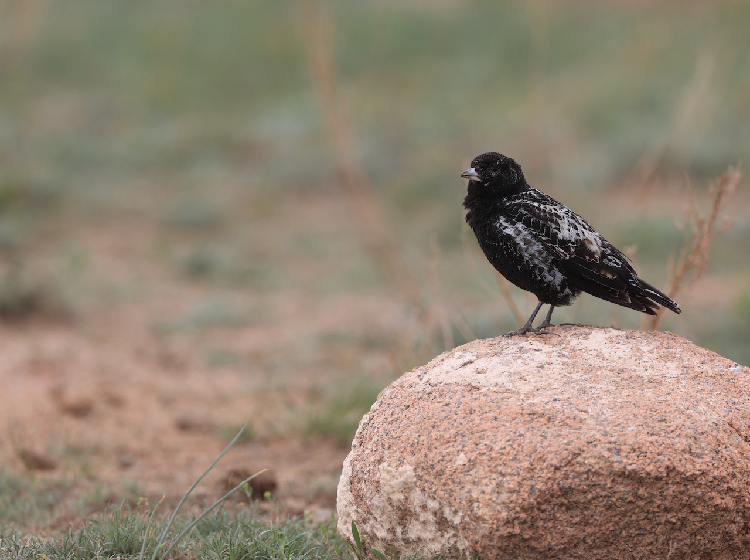
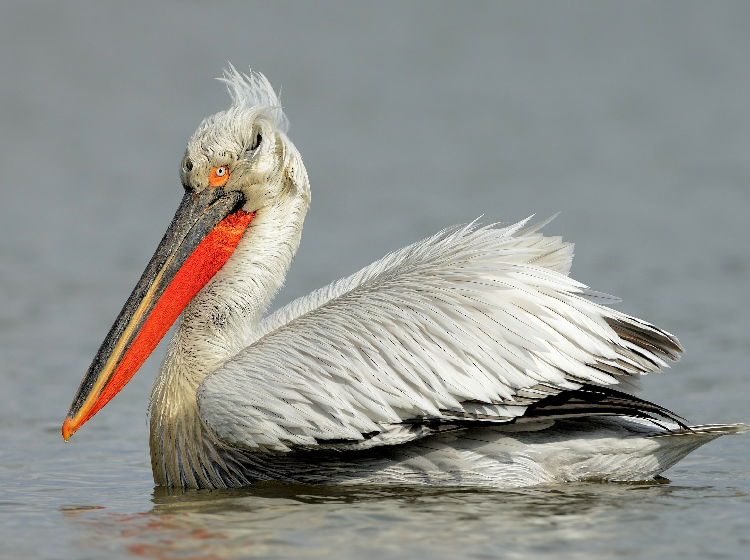
Out on the steppe and in the deserts there’s a different cast again: Sociable Lapwing (a critically endangered species that breeds here), Black Lark and White-winged Lark, the displaying MacQueen’s Bustard, Saxaul Sparrow, Pander’s specialties, and rosefinches such as Blyth’s and Red-mantled. The wetlands add White-tailed Lapwing, Marbled Teal, Dalmatian Pelican and Blue-cheeked Bee-eater.
It’s a remarkable concentration of birds that are difficult or impossible to photograph elsewhere — and most have barely been photographed well at all.
Three Countries, Three Characters
Central Asia isn’t one habitat but several, and the three core countries each bring something distinct.
Kazakhstan is the giant — endless steppe, the Taukum Desert, the dramatic Charyn Canyon, mountain forests south of Almaty, and vast northern wetlands near the Russian border. This is the country of wide-open grassland birds, displaying bustards at dawn, and larks and lapwings of the steppe, all set against immense skies. Camping in traditional yurts in the desert is part of the experience.
Uzbekistan combines exceptional desert and wetland birding with something no other birding destination offers in quite the same way: the Silk Road. Mornings spent searching the Kyzylkum for ground-jays and sandgrouse can give way to afternoons among the madrassahs and minarets of Bukhara and Samarkand. For photographers who value a sense of place — and a trip companion who doesn’t bird — that cultural richness is a genuine asset.
Tajikistan and the surrounding mountain country push higher still, into the outliers of the Tien Shan and toward the Pamirs, with juniper forests and high passes holding range-restricted species like Blyth’s Rosefinch and the specialties of the Uzbekistan-Tajikistan borderlands. It’s the wildest and least-visited of the three.
Together they can be combined into a single journey that moves from desert to mountain to steppe in the space of a couple of weeks.
When to Go
Timing is the one thing you can’t be loose about. The prime window is spring into early summer — roughly May and June — when the region is at the height of its breeding season. The migrants have arrived, the resident specialties are displaying and singing, the steppe is green and carpeted with wildflowers and poppies, and the high passes have opened up enough to give access to the mountain birds.
Desert birding in particular rewards early starts: the Turkestan Ground-Jay and other arid-country specialties are most active and most findable in the first cool hours after dawn. For some lower-elevation desert circuits the productive season extends through summer, but for the classic mountain-and-steppecombination, late spring is the sweet spot.
What It’s Like to Photograph Here
A few things make Central Asia distinctive behind the lens.
The light and space are extraordinary. Clear continental air, low humidity, and enormous open landscapes mean you’re often photographing birds in clean light with uncluttered backgrounds — snow peaks, desert pastels, steppe horizons. It’s a refreshing change from the dim, tangled conditions of tropical forest photography.
You’ll work for some birds, and that’s part of it. Many of the specialties are thinly distributed across big country. This is photography that rewards patience, early mornings, and local knowledge of where a particular ground-jay territory or bustard lek can be found. The payoff is images of birds that very few photographers have ever captured well.
Logistics need a guide. Distances are vast, some of the best areas are genuinely remote (desert yurt camps, mountain valleys far from any town), and the specialties are local. Travelling with people who know the exact sites turns a logistically daunting region into a smooth and richly rewarding trip.
A Region Worth Beating the Crowds To
Central Asia won’t stay a secret forever. As more photographers discover the White-browed Tit-Warbler and the Turkestan Ground-Jay, the region’s profile is steadily rising. For now, though, it remains one of the few places where you can photograph genuinely spectacular, hard-to-find birds in solitude, in beautiful light, against landscapes most people never imagine.
We run small-group bird photography tours across the region, timed for the peak spring season and built around the specialties that make it special. Explore our trips to Kazakhstan, Tajikistan and Uzbekistan, or browse the neighbouring mountain destinations of Kyrgyzstan and Turkmenistan.
If you’d like to combine two or more of these countries into one journey — or build a trip around a specific target like the ground-jay or the tit-warbler — our custom photography tours are made for exactly that. Get in touch and let’s plan your Central Asia expedition before the secret gets out.
Nick Ludovic Green
Nick Ludovic Green is a bird photographer and founder of Bird-Photo-Tours ASIA, leading small-group expeditions across Asia and Oceania.
Japan is a highly seasonal bird photography destination. Winter is the peak season, with Red-crowned Cranes, sea eagles, swans and large crane gatherings, while spring and autumn are best for migration and summer for breeding birds and seabirds.
A practical guide to hide photography in China, covering how bird hides work, what species to expect, how to prepare your gear and mindset, and why hides are essential for photographing pheasants, tragopans and forest birds.
A practical guide to photographing birds-of-paradise in Papua New Guinea, covering key regions, signature species, the best season, photography conditions, gear tips and itinerary planning.